IFAS News
Institute of Food and Agricultural Sciences – University of Florida
Archive for August, 2004
P.K. Nair – UF Agroforestry Pioneer – Receives Two National Awards
August 17, 2004
Topic(s): Uncategorized
By:
Chuck Woods (352) 392-1773 ext. 281Source:
P.K. Nair pknair@ufl.edu, 352-846-0880
GAINESVILLE, Fla.—P.K. Nair, distinguished professor of agroforestry at the University of Florida’s Institute of Food and Agricultural Sciences (UF/IFAS), will receive two national awards for his scientific contributions.
The Society of American Foresters will present its Barrington Moore Memorial Award to Nair for outstanding achievements in agroforestry research, and the Crop Science Society of America will present its 2004 International Crop Science Award to Nair for bringing about changes at the international level in practices, products and programs related to crop production. (more…)
Strong Walls
August 12, 2004
Topic(s): Uncategorized
Source:
Thomas Wright
Stand-Alone Photo (No Story Available)
UF Researchers: Tree, Cotton Combination Reduces Pollution
August 11, 2004
Topic(s): Uncategorized
Source(s):
Shibu Jose sjose@ufl.edu, 850-324-2039
P. K. Nair pknair@ufl.edu, 352-846-0880
Sam Allen scallen@ufl.edu, 352-846-3496
GAINESVILLE, Fla. — By growing crops and trees side by side, farmers can dramatically reduce groundwater pollution caused by fertilizers, a University of Florida study shows.
Researchers at UF’s Institute of Food and Agricultural Sciences grew cotton in a grove of pecan trees, cutting the amount of nitrate that seeped from the cotton field to the groundwater by slightly more than two thirds. (more…)
Sea Grass Research Points To Changing Coastal Environment
August 3, 2004
Topic(s): Uncategorized
Source:
Jason Hale jah@ifas.ufl.edu, 352-392-9617 ext. 265
GAINESVILLE, Fla.— Sea grasses — essential to Florida’s marine ecology — are changing near the mouths of rivers on the state’s west coast, and nutrients in runoff from farms, yards and septic tanks may be the cause, according to University of Florida researchers.
“Large scale losses of sea grass in this area would mean fundamental changes to coastal ecology — comparable to clear-cutting a rain forest,” said Jason Hale, a biologist with UF’s Institute of Food and Agricultural Sciences. (more…)
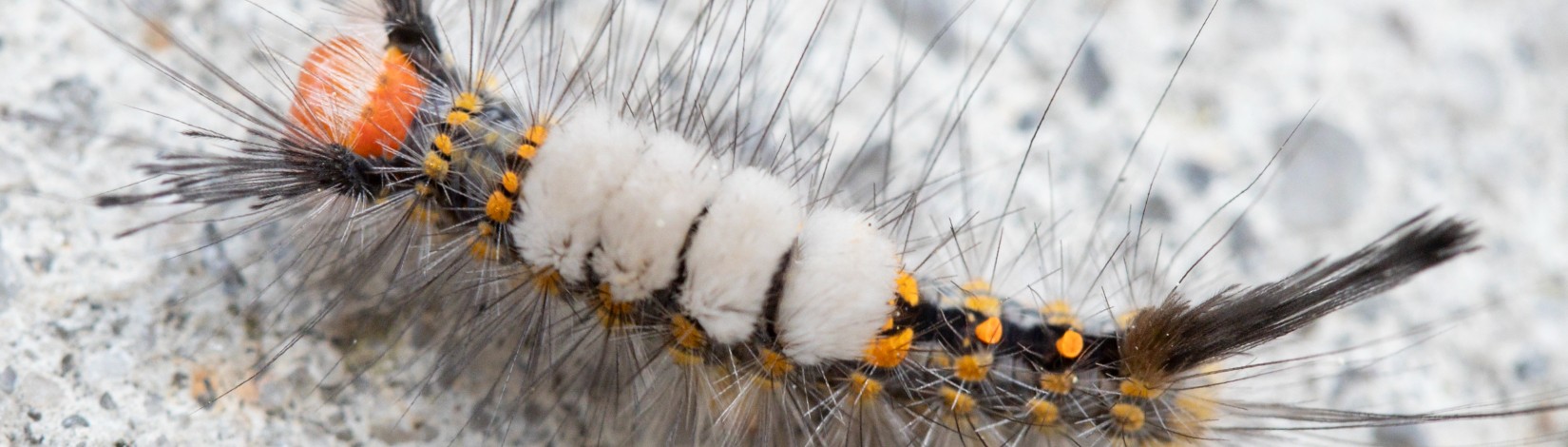
Lepidoptera
August 2, 2004
Topic(s): Uncategorized
Source:
Thomas Wright
Stand-Alone Photo (No Story Available)